Not too long ago, building a website meant hiring a web designer, learning how to use a website platform, or spending countless hours trying to figure out how to make everything work. These days, things are a little different. With AI website builders becoming increasingly accessible, you can describe the kind of website you want, answer a few questions and have an entire website generated for you in a matter of minutes.
For small business owners, freelancers and entrepreneurs, this is understandably appealing. Why spend thousands of dollars hiring someone when you can potentially build something yourself for a fraction of the cost?
And honestly, I think that’s a good thing. AI website builders have made it easier for people to get their businesses online, particularly those who are just starting out or don’t have a large budget to work with. If all you need is a simple website to introduce your business, showcase your work or provide basic information, an AI website builder might be all you need.
But before you jump in and start writing prompts, there’s something worth thinking about. Building a website and building a website that actually works for your business are two very different things.
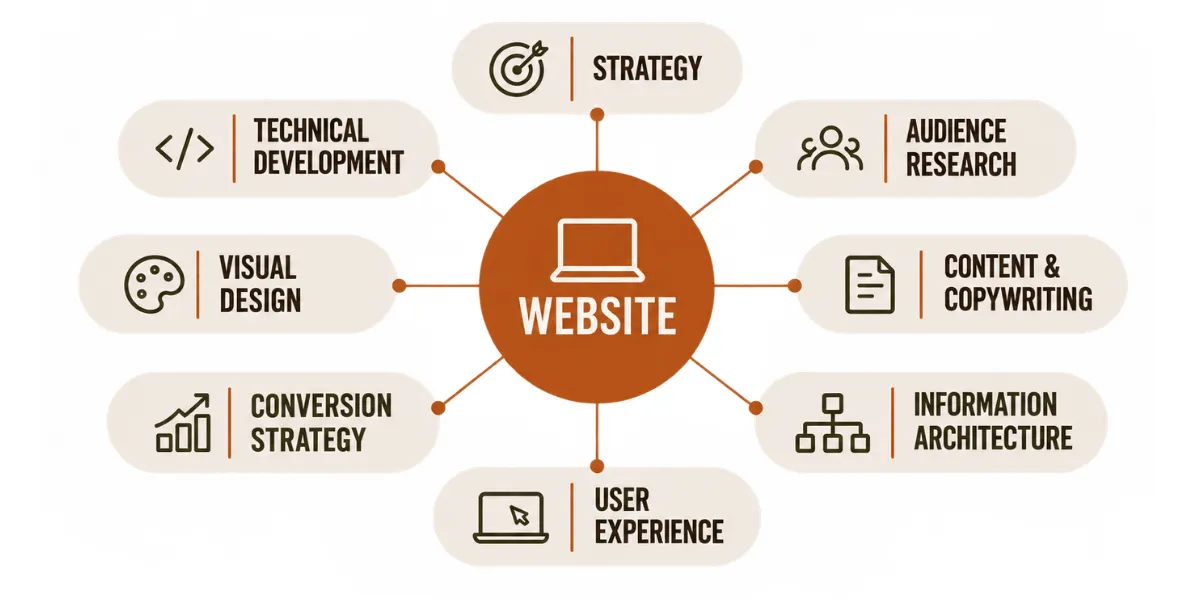
A website isn’t just a collection of pages, images and text. It’s one of the tools you use to communicate with potential customers, establish credibility, answer questions and encourage people to take the next step, whether that’s making an enquiry, booking a consultation or purchasing something from you.
So, should you use an AI website builder or hire a professional web designer? Let’s look at what each option offers and, more importantly, what you should consider before making that decision.
What Can AI Website Builders Actually Do?
Platforms such as Webflow, Hostinger and Framer have made website creation considerably easier. Depending on the platform, you can describe your business, choose a design direction, specify the pages you need and let AI generate an initial website for you.
Some platforms can also help with writing website copy, suggesting layouts, selecting colour palettes and typography, generating images, creating contact forms and configuring certain SEO settings. You can even make changes by simply telling the AI what you’d like to adjust, rather than having to figure everything out yourself.
For someone starting a new business, this can be a great starting point. Perhaps you need a simple portfolio, a landing page for a new service or a basic website to establish an online presence. You might not need anything particularly complicated, and there’s no reason to spend thousands of dollars on a website if your requirements are fairly straightforward.
The technology is genuinely useful, and I don’t think business owners should dismiss it simply because they’re considering hiring a designer. However, generating a website is one thing. Knowing what that website needs to communicate and how it should work is another.
A Website That Looks Good Doesn’t Necessarily Work Well
One thing I often think gets overlooked in conversations about website builders is the difference between a website that looks good and one that actually does its job.
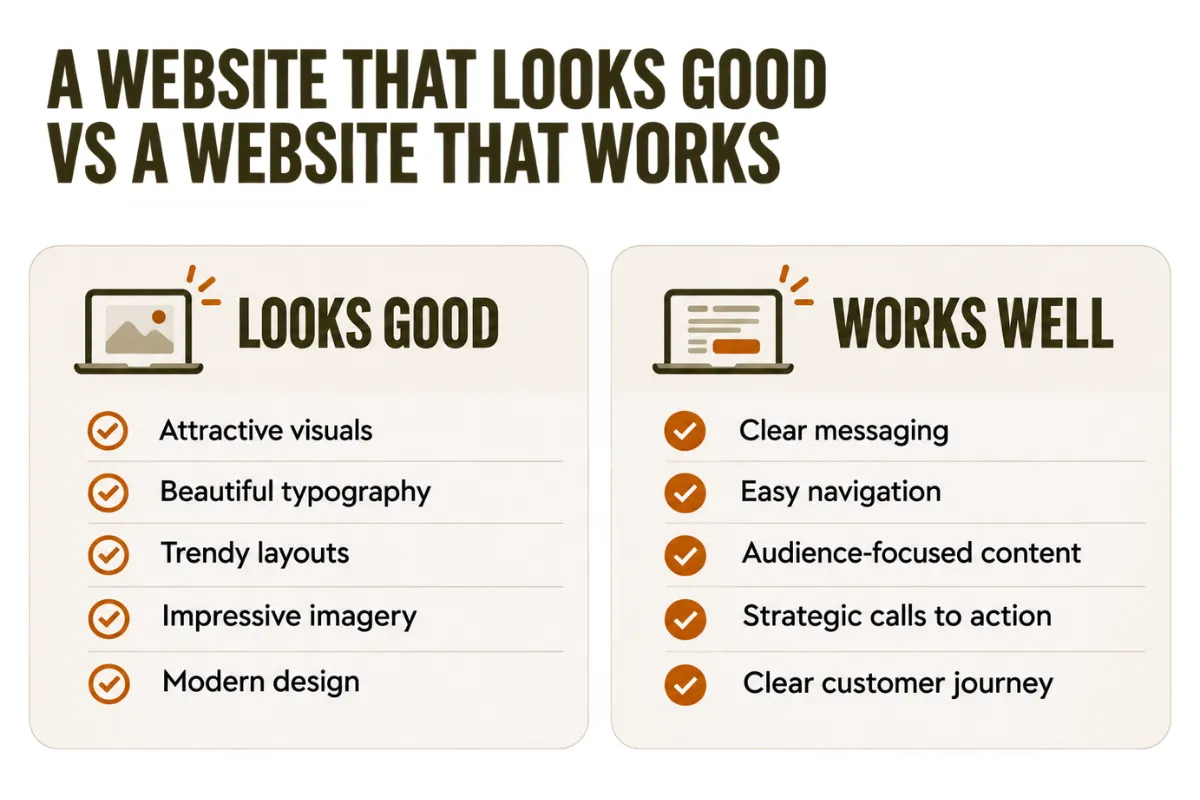
It’s relatively easy to look at a beautifully designed homepage and assume everything is working as it should. The colours are consistent, the typography looks great, the images are attractive and the layout feels modern. But what happens when someone actually visits the website? Do they understand what the business offers? Can they find the information they’re looking for? Do they know what to do next?
Imagine you’re a yoga teacher offering private sessions, group classes and a six-week mindfulness programme. You ask an AI website builder to create a website for your business, and it generates a homepage, an about page, a services page and a contact page. Everything looks presentable, and you now have a website ready to publish.
But perhaps your main business goal isn’t to get people to enquire about private sessions. You actually want to fill your six-week programme. In that case, your website needs to do more than list your services. It needs to introduce the programme, explain its benefits, address potential concerns, establish trust and guide visitors towards registration.
The AI might have given you a perfectly acceptable website, but did it understand that filling your programme was the main objective? Did it structure the content around that goal? Did it consider what someone might need to know before deciding to sign up?
These are the kinds of questions that need to be answered before you start building.
The Part Nobody Talks About Enough: Website Strategy
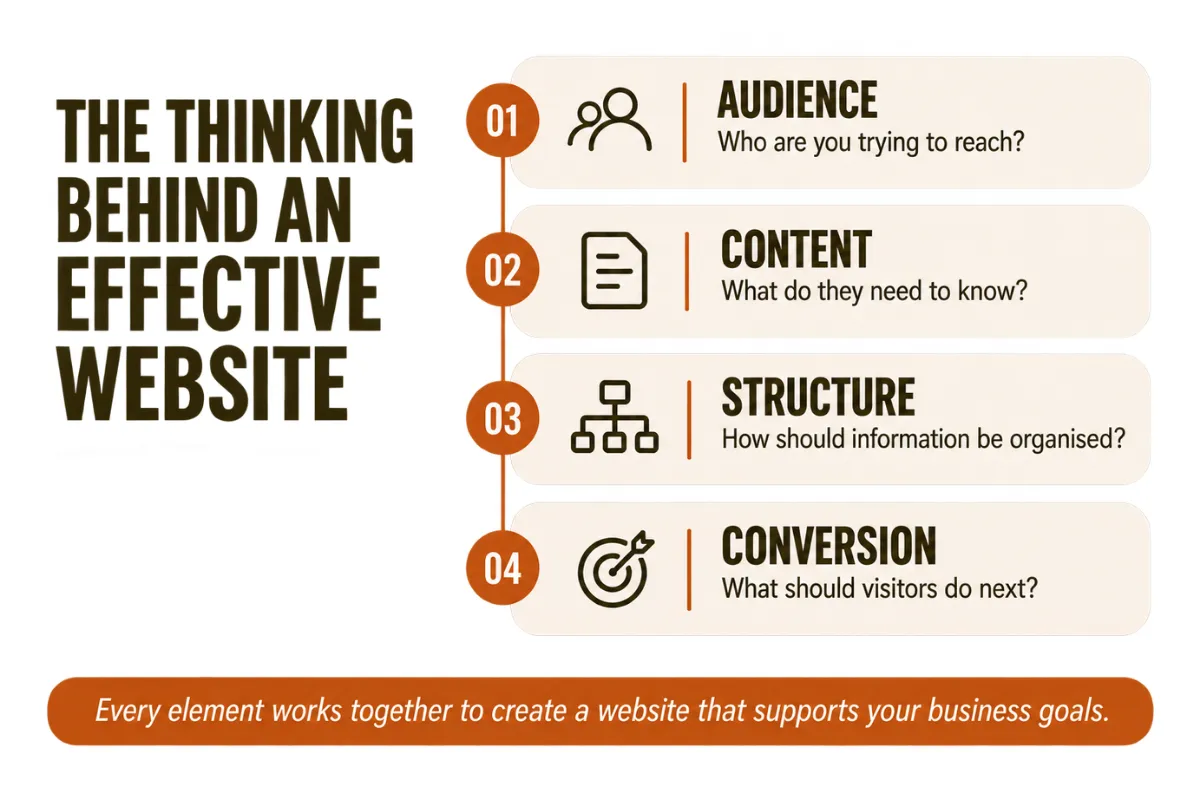
Before choosing a website platform or deciding how your website should look, you need to figure out what you’re actually trying to achieve with it. This is where website strategy comes in.
Website strategy isn’t some complicated exercise reserved for large businesses with enormous marketing budgets. It’s simply about understanding your business, your audience and what your website needs to do. It also means thinking about how all the different elements work together, from the content and navigation to the customer journey and the actions you want visitors to take.
There are a few important things to consider.
1. Understanding Your Audience
Who are you trying to reach? What are they looking for? What problems are they trying to solve? And what questions might they have before deciding to work with you?
Your website should be built around the people you want to attract, not simply around what you want to tell them about your business.
For example, someone looking for a brand designer might want to understand the design process, see examples of previous projects, learn about pricing and know what it’s like to work with you. Someone looking for a mindfulness coach might have entirely different questions and concerns.
Understanding your audience helps you decide what information your website needs and how best to present it. Without that understanding, you’re essentially guessing what your visitors want to see.
2. Planning Your Website Content and Copywriting
Website copywriting is much more than filling empty spaces with words. Every page should have a purpose, and the content should help visitors understand your business, your services and why they should consider working with you.
Your homepage needs to communicate what you do, who you help and why your offering is relevant. Your services page should explain what you’re offering and how it can help. Your about page should give visitors a reason to connect with you and establish some credibility.
AI can certainly help with copywriting. It can generate ideas, produce initial drafts and help you refine existing content. But you still need to know what you want to communicate.
If you simply ask AI to write a homepage for your business, you’ll probably get something that sounds reasonably professional. The problem is that it might also sound like hundreds of other websites. Without a clear understanding of your audience, messaging and positioning, it’s difficult to create copy that actually reflects your business and speaks to the right people.
The quality of the content depends heavily on the information and direction you provide. And if you’ve never thought about website messaging or copywriting before, you might not even know what questions to ask.
3. Creating the Right Website Structure
Have you ever visited a website and struggled to find the information you were looking for? Perhaps the navigation is confusing, important information is buried several pages deep, or you have no idea where to go next.
That’s an information architecture problem.
Information architecture is about organising your website’s content in a logical and accessible way. It determines which pages you need, how they’re connected and how visitors move between them.
A service-based business might need a homepage, about page, services pages, portfolio, blog and contact page. But simply having these pages isn’t enough. You also need to think about how they connect.
Should someone reading a blog article be directed towards a particular service? Should your portfolio lead visitors towards an enquiry form? Should your homepage direct people to a specific programme or product?
These might seem like small details, but they influence how someone experiences your website. A well-planned structure makes it easier for visitors to find what they need without having to work for it.
4. Mapping Out the Customer Journey
Not everyone who visits your website is ready to buy, book a consultation or enquire about your services. Some people are discovering your business for the first time, while others are researching their options or trying to decide whether your services are right for them.
Your website needs to accommodate these different stages.
Think about the journey you want someone to take. They might discover your business through a Google search, read one of your blog articles, visit your services page and download a free resource. From there, they might join your mailing list and eventually decide to book a consultation after receiving a few emails.
This is a customer journey, and your website should help facilitate it.
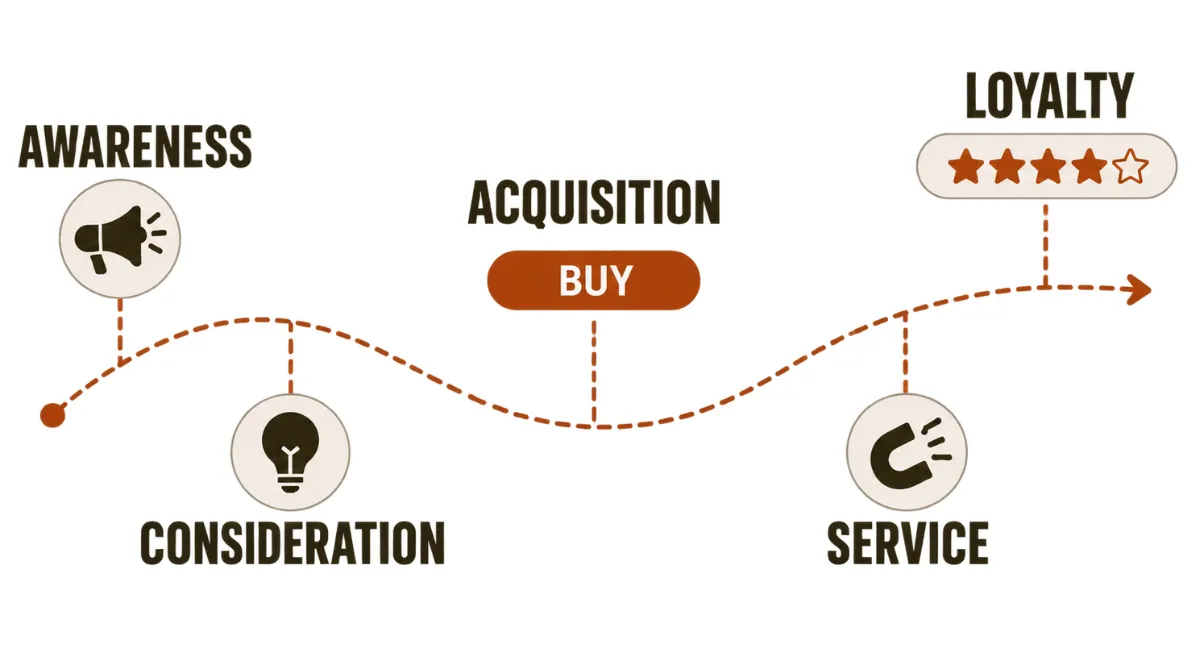
It’s also where conversion strategy comes into play. Where should you place your calls to action? What should visitors be encouraged to do on each page? How do you guide someone from being interested in your business to actually taking the next step?
You can certainly ask AI to help map out a customer journey, but you’ll need to understand your business model and audience before you can give it meaningful direction.
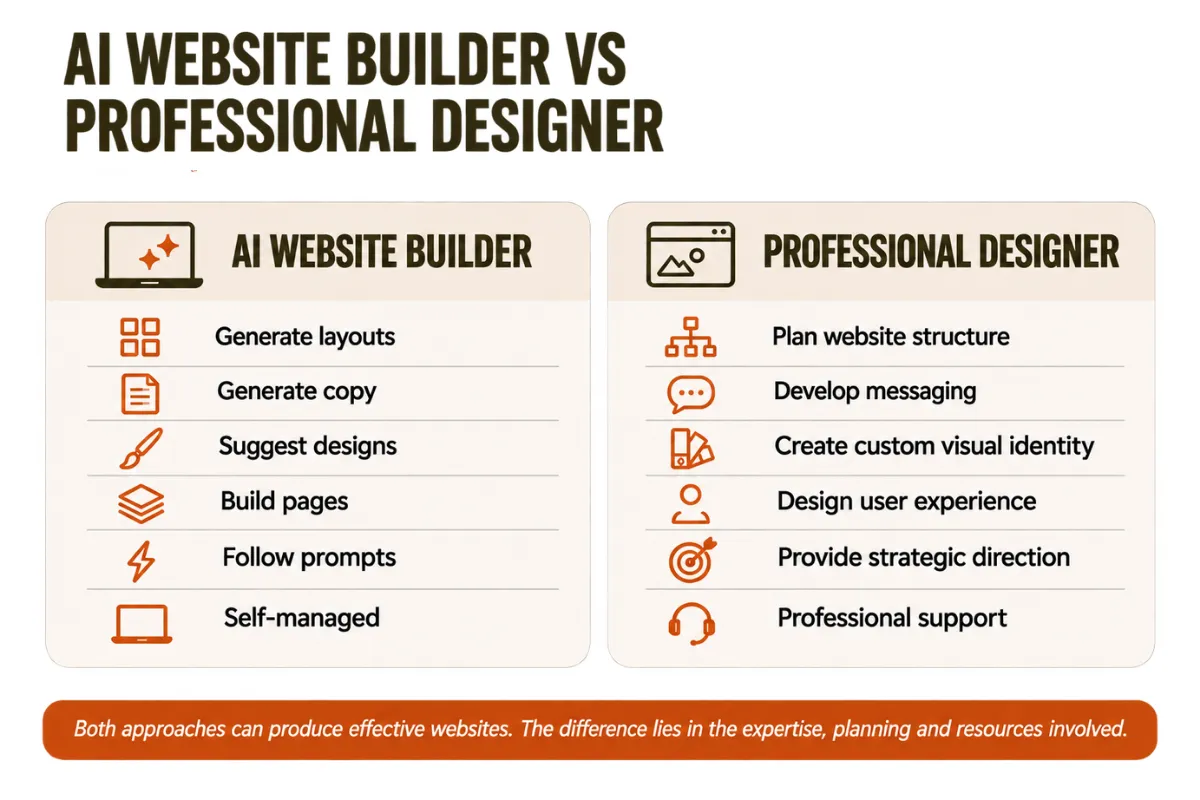
AI Website Builders vs Hiring a Professional Web Designer
So, let’s look at the two options more closely. Neither approach is automatically better. The right choice depends on your business, budget, technical confidence and what you need your website to accomplish.
Using an AI Website Builder
The advantages
- Lower initial investment: Generally more affordable than hiring a professional designer.
- Faster website creation: You can generate a basic website relatively quickly.
- Accessibility: You don’t necessarily need design or development experience to get started.
- Greater independence: You can make basic updates without contacting a designer.
- Suitable for simple projects: A good option for portfolios, landing pages and businesses with straightforward requirements.
The disadvantages
- Lack of strategic direction: Without a clear plan, you might end up with pages that look good but don’t support your business goals.
- Generic content: AI-generated copy can lack personality and fail to communicate what makes your business different.
- Limited customisation: Some platforms have restrictions when it comes to advanced functionality, integrations and design requirements.
- Technical limitations: You still need to understand what needs configuring, testing and maintaining.
Hiring a Professional Web Designer
The advantages
- A strategic approach: A good designer considers your business goals and audience before jumping into visual design.
- Better content planning: They can help organise your messaging, page content and website structure.
- Improved user experience: Your website can be designed around how visitors navigate and interact with it.
- An outside perspective: An experienced designer can identify gaps, ask questions you might not have considered and help communicate your business more effectively.
- Technical expertise: They can handle responsive design, functionality, integrations and performance.
The disadvantages
- Higher investment: Professional website design requires a larger initial budget.
- Longer timelines: The process generally takes longer than generating a website with AI.
- Your involvement is essential: A successful project requires input about your business, audience, services and content.
- Not all designers offer strategy: Some focus primarily on visual design, so it’s important to understand what’s included before hiring someone.
It’s also worth remembering that hiring a designer doesn’t automatically guarantee a strategic website. The experience and approach of the person you work with matter just as much. Some designers focus mainly on making things look good, while others take a more comprehensive approach that includes research, content planning and user experience.
Can You Combine AI With Professional Website Strategy?
Absolutely. You don’t necessarily have to choose between using AI and hiring a professional. There’s also the option of getting help with the planning and strategy, then using an AI website builder to create the website yourself.
Before opening an AI website builder, you could work with a website strategist to establish your website’s objectives, target audience, messaging, page structure, content requirements, calls to action and the functionality you need.
With that information in hand, you’ll have a much clearer idea of what you’re asking AI to create. You’ll know what belongs on each page, what information visitors need and what you want them to do next. You’ll also have something to refer back to when reviewing the website AI generates, rather than simply accepting whatever it produces.
You can still use AI throughout the process to develop copy, refine layouts, generate ideas and troubleshoot problems. The difference is that you’re approaching the project with a plan.
AI is a tool, but knowing how to use it effectively makes all the difference.
So, Which Option Should You Choose?
Before deciding whether to use an AI website builder or hire a professional web designer, think about what you actually need from your website. Here are a few questions worth asking yourself.
1. What is the primary purpose of my website?
Is it simply to establish an online presence, showcase your portfolio or provide basic business information? Or do you need it to generate enquiries, sell products, attract new clients or support a more complex customer journey?
2. How important is my website to my business?
For some businesses, a website is little more than an online business card. For others, it’s their primary marketing and sales platform. The more important your website is to generating revenue and attracting customers, the more thought you should put into its strategy and functionality.
3. Do I understand what makes an effective website?
Are you comfortable planning your website structure, writing content, organising navigation and creating a customer journey? If not, are you willing to learn? Using an AI website builder doesn’t eliminate the need to make these decisions. It simply gives you a tool to help execute them.
4. Do I have the time to build and maintain my own website?
Building a website is one thing. Keeping it updated, managing its content, checking functionality and making improvements is another. Be realistic about the time and effort involved.
5. What is my budget, and what am I willing to invest?
A lower upfront cost might seem attractive, but consider the longer-term value of your website. A website that doesn’t communicate your services clearly or generate meaningful enquiries might end up costing you more in missed opportunities. On the other hand, spending thousands on a complex website when you only need a simple portfolio might not be the best use of your resources.
The goal isn’t to spend as much as possible. It’s to invest in what your business actually needs.
You Don’t Necessarily Need a Designer. But You Do Need a Strategy.
I don’t think AI website builders are something business owners should avoid. They’ve opened up opportunities for people who previously couldn’t afford a designer or didn’t have the technical knowledge to build a website themselves, and that’s a good thing.
But I do think it’s easy to get caught up in how quickly AI can generate a website and forget about everything that goes into making it effective. Having a homepage, an about page and a services page doesn’t automatically mean you’ve got a website that supports your business.
You need to think about what you’re communicating, who you’re communicating it to, how visitors find their way around and what you want them to do once they’re there. These things matter whether you’re using AI, building the website yourself or working with a professional designer.
So before experimenting with prompts, choosing templates or asking AI to generate your homepage, take some time to figure out what you actually want your website to achieve. You’ll make better decisions, avoid unnecessary work and have a much clearer idea of what you’re building.
Ultimately, the platform you use is less important than having a clear understanding of what your website needs to do.
Want to Get More Out of Your Website?
Whether you’re building a website from scratch or thinking about redesigning an existing one, understanding what makes a website effective is a good place to start.
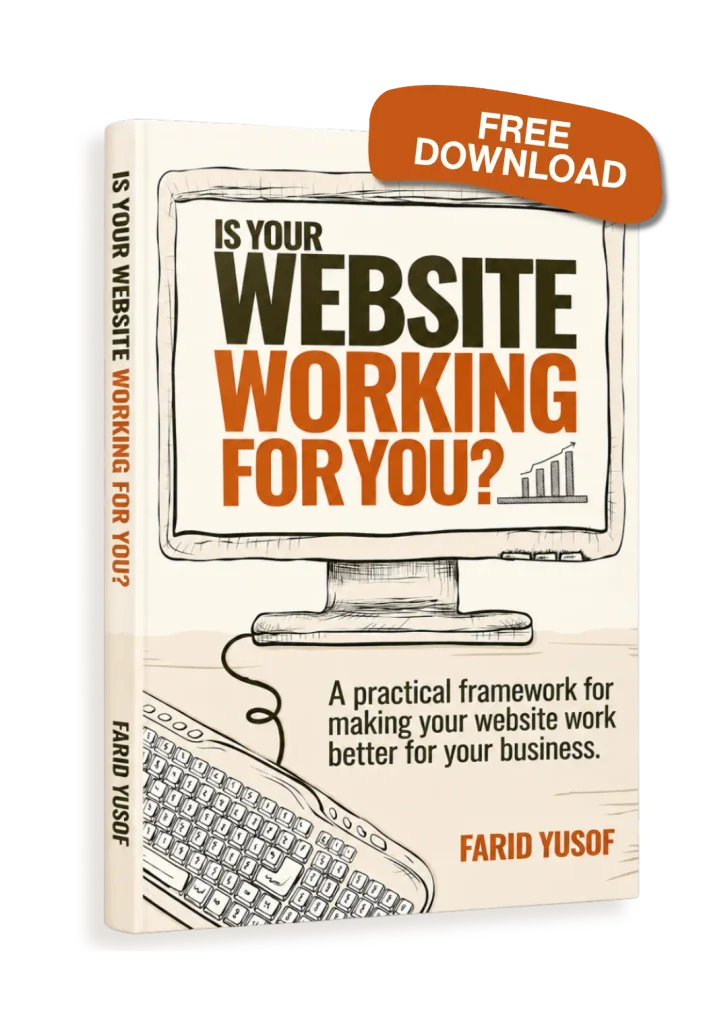
If you’d like to take a closer look at your own website, download our free guide, Is Your Website Working for You? It’s a practical resource to help you evaluate your website, identify areas that need improvement and understand what you should be paying attention to.
Download Your Free Ebook →
Not Sure Where to Start?
Perhaps you’ve identified a few things that need improving, but you’re not quite sure how to approach them or what to prioritise. That’s where we can help.
At Faridunia Studio, we offer a Brand & Website Strategy Session to help you understand what your website needs, identify opportunities for improvement and develop a clearer direction for your online presence.
We’ll look at your business goals, audience, messaging, website structure and overall user experience, giving you a practical framework to move forward with. Whether you decide to build your website yourself using AI or work with a professional designer, you’ll have a much clearer idea of what you’re creating and why.